KSBR’s Jenni Veijola: “Occupational safety is not just about equipment”
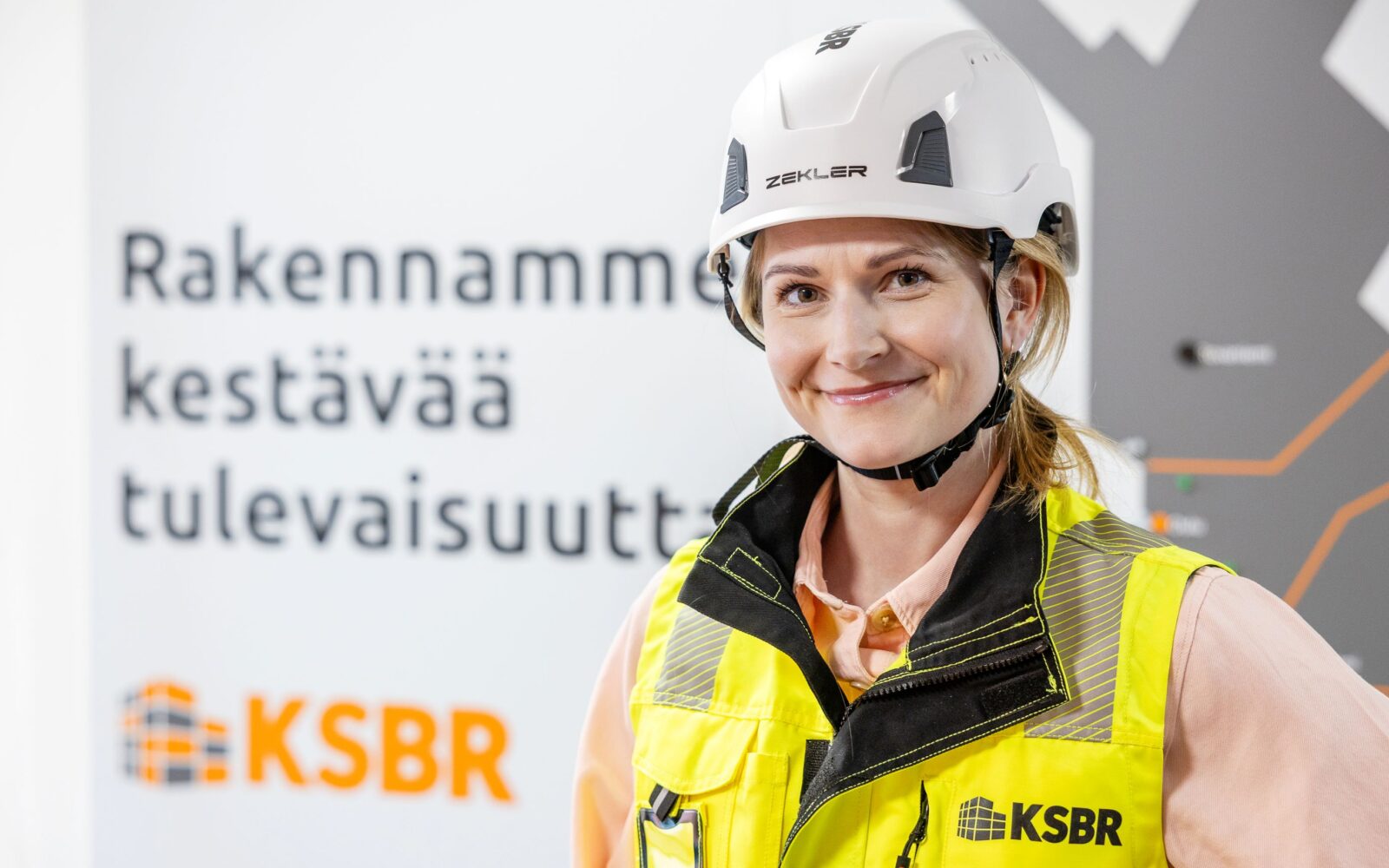
KSBR’s newly appointed HSEQ Manager, Jenni Veijola, describes herself as an optimist. Originally from Kainuu and now based in Oulu, Veijola also takes a positive view of how occupational safety is developing.
– Across the industry, safety culture is finally moving away from the idea that safety is mainly improved by buying new work gloves or a new machine. We are heading toward the core issue – what goes on in people’s minds, how they behave and how they operate. If a site genuinely wants to achieve a zero‑accident target, it cannot be reached through technical solutions alone, she emphasizes.
Veijola often talks about unidentified risks, which, according to statistics, frequently play a role in accidents and near‑miss incidents.
– Routine work easily dulls our thinking, and then we may fail to recognize even obvious hazards. That’s why it’s worth starting any task by asking: what is the worst that could happen here? When risks are considered together, everyone can contribute their own skills and experience. It’s much easier to identify a wider range of hazards as a group, Veijola says, advocating a shared site culture.
Getting to know KSBR from the client side
Jenni Veijola became familiar with KSBR’s operating culture in the 2020s during the Kemi bioproduct mill project and the O750 project in Oulu.
– I worked on those projects on the client side as a safety coordinator. At both sites, KSBR’s operations were well managed, it was easy to work with the people, and things were done exactly as agreed.
– When chatting with employees, I received nothing but positive feedback about KSBR as an employer. That kind of feedback is quite rare — especially when you’re talking in biting wind and driving rain in the middle of a challenging concrete pour. That’s why I once mentioned to Marko (Leppänen) that if a suitable position ever opened up for me, they should get in touch.
That moment came in March 2026.
– The team has welcomed me extremely well. Here, issues can be raised openly, and future development potential is clearly recognized. KSBR’s strength lies in the fact that people know each other well and are highly committed.
Not a separate island
Veijola may surprise some by saying that she stopped talking explicitly about “safety” a long time ago. There is, however, a logical reason for this: in her view, safety is not a separate island disconnected from everyday work. When work is done efficiently and with high quality, safety comes automatically.
– If work phases are clearly planned, tools are known in advance, and the site is well organized, things run smoothly. But if you start working without proper planning and suddenly realize something is missing and go looking for it, you create unnecessary movement and efficiency suffers. Your focus also drifts more easily — and then you hit your finger with a hammer. Safety is achieved when certain things are done right. There’s no need to first do the work and then separately ‘do safety’.
It’s okay to speak up about shortcomings
Although progress is being made, Veijola believes there is still plenty of room for improvement in the construction industry’s overall safety mindset.
– Once Finns get over the threshold of thinking ‘I’m not anyone’s babysitter,’ ‘that’s not my job,’ or ‘I don’t dare say anything,’ we’ll take major leaps forward in developing safety culture.
In practice, this means that both supervisors and workers see it as normal to point out, for example, if a colleague is missing safety glasses.
– I once received valuable feedback while starting up an Esko table saw – I was told not to start the machine without wearing safety glasses. It hadn’t occurred to me that debris could fly into my eyes. I thanked the observer for acting decisively. None of us is a master of everything, which is why it’s good to remind a colleague before something happens.
More broadly, Veijola sees all safety, environmental, and quality observations as excellent ways to influence one’s own work and share lessons learned within the organization. Strong proactive safety work is also a clear selling point toward customers.
A sustainable path toward zero accidents
Jenni Veijola will be emphasizing, among other things, the importance of recording observations when she visits KSBR’s sites in May. Last week, she visited a data center project and the Korkeamaa wind farm. Currently underway is a long‑term safety development plan aimed at creating a sustainable path toward the zero‑accident goal.
Safety is one of KSBR’s core values. The company aims to be the safest employer in the industry and wants to ensure safe and equal working conditions for its employees. Veijola already knows that at KSBR, values are not just empty words.
She also knows that employees tend to take pride in the quality of the work they deliver. Quality comes up in discussions in one way or another every single day.
– I want to add one more theme alongside that conversation: that the way we work ensures every employee and subcontractor gets home healthy at the end of every day.
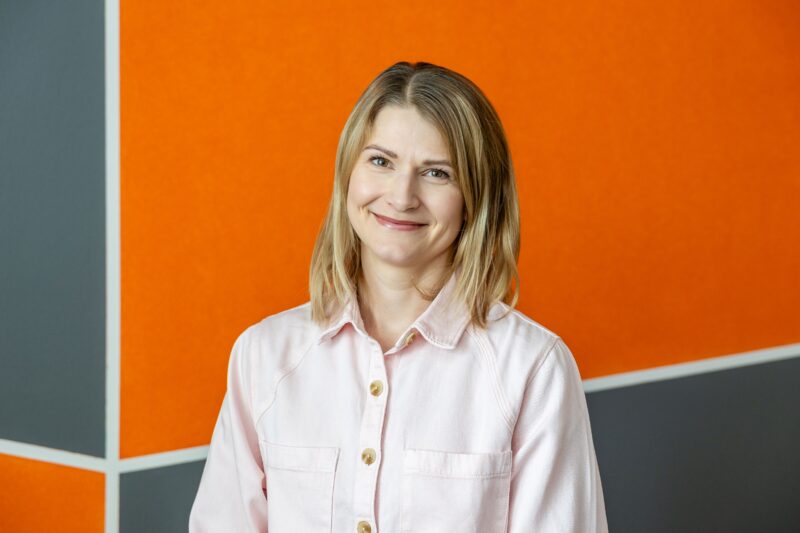
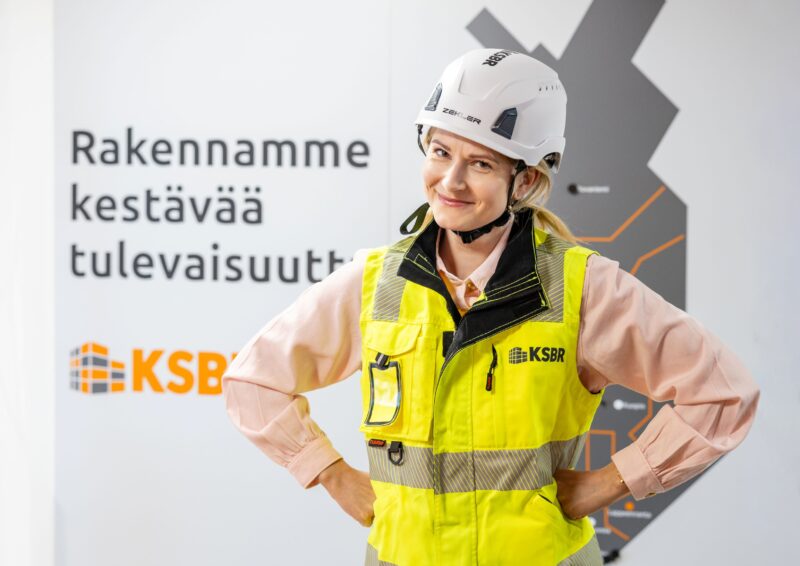
Jenni Veijola is developing a long-term safety plan for KSBR. Photos: Anu Leppänen.