The foundations of the Hipposkeskus parking facility were replaced with low-carbon concrete
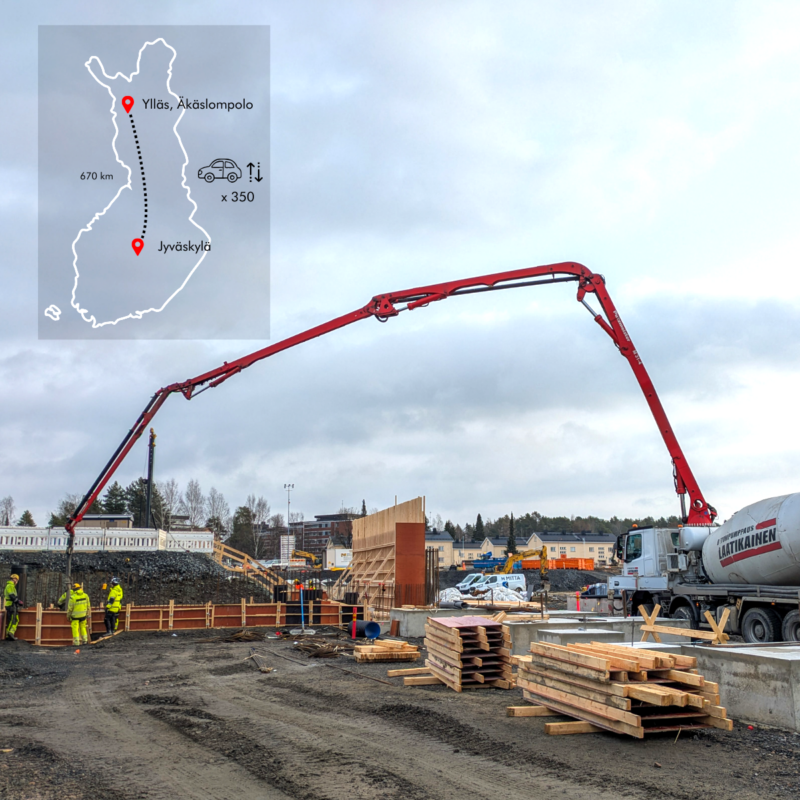
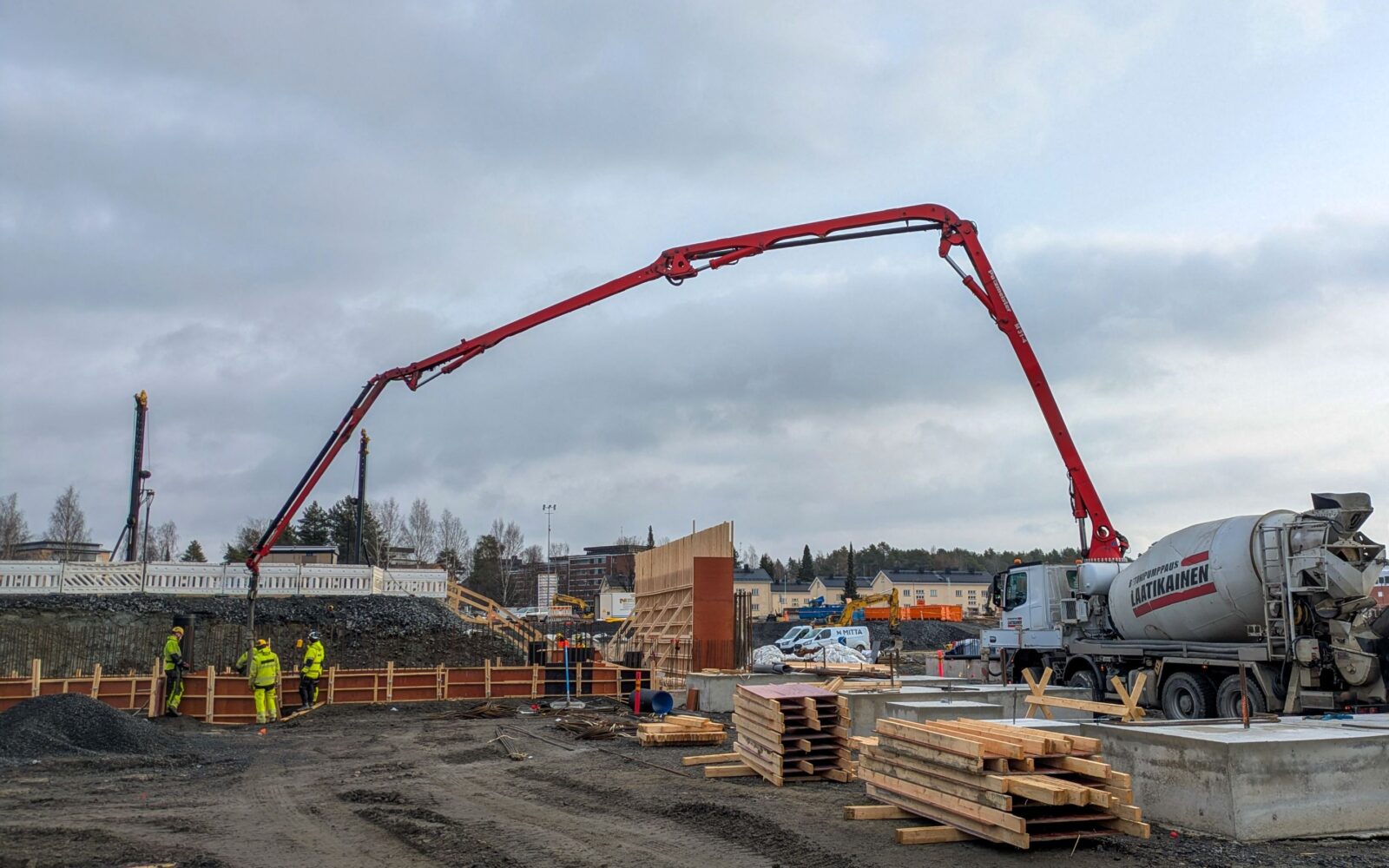
KSBR (Keski-Suomen Betonirakenne Oy) is building a parking facility in Jyväskylä next to Hipposkeskus, the foundations of which will be constructed using low-carbon concrete.
Low-carbon concrete has a carbon dioxide emission level of approximately 15 percent lower than traditional concrete. The material has a GWP.85 rating, which stands for Global Warming Potential. The number refers to the proportion of the reference level of normal concrete.
Lujabetoni manufactures and supplies the concrete used in the foundation casting of the project. Low carbon is achieved by optimizing the composition of the concrete and utilizing alternative binders, which reduces the need for cement and overall emissions.
– There were no requirements from the authorities or within the project for the use of low-carbon concrete. There are increasingly strict climate targets in construction legislation, and the idea of switching to low-carbon concrete came from discussions between KSBR and Lujabetoni. We also want to gain more experience with its properties and workability. The client was sympathetic to our proposal, KSBR´s project manager Marko Koskinen reports.
72 tons less CO2 emissions
– We both want to be strongly involved in the industry’s transformation towards lower-carbon construction. In collaboration with customers, we can find solutions that reduce construction emissions without compromising the quality or functionality of the structures, comments sales manager Marko Tolonen from Lujabetoni.
The change will result in 72 tons less CO2 emissions from the construction of the parking facility’s foundations alone compared to regular concrete.
– We calculated that with that 72 tons, for example, a combustion engine car can make a total of 350 trips from Jyväskylä to Ylläs and back, Tolonen explains.
Towards lower-carbon construction
In the Hippos Center project, KSBR and Lujabetoni aim to jointly develop both structural solutions and operating methods towards lower-carbon construction.
– Although the environmental impact of concrete has been reduced, the strength and properties of the concrete used are completely equivalent to those of traditional concrete, meaning its use does not affect the structure, durability or other properties, KSBR’s Marko Koskinen explains.
According to Koskinen, the difference is mainly noticeable in that the strength development of low-carbon concrete is slower.
– The heat generation of low-carbon concrete mass during curing is lower. The footings of the parking facility are large, so lower heat generation and thus slower strength development are not a problem in terms of implementation. Excessive heat generation has been a challenge even more with normal mass. Based on our experience, low-carbon concrete works really well in foundation structures like this, says Marko Koskinen.
The Hipposkeskus project, with an estimated cost of 210 million euros, includes, in addition to the parking facility, sports, skills and ice sports centers, the contracts for which have been divided into several smaller parts.